
Abnormal Uterine Bleeding Treatment in Beverly Hills
Comprehensive Treatment for Abnormal Bleeding
Bleeding that disrupts work, sleep, or plans is worth taking seriously, and it is rarely something you simply have to live with. Dr. Karen Toubi, a board-certified gynecologist and abnormal bleeding specialist in Beverly Hills, focuses on finding the cause behind the symptom and pairing it with treatment that fits your body and your goals.
What Is Abnormal Uterine Bleeding?
The term covers any bleeding pattern outside your normal cycle: heavy menstrual bleeding (sometimes called menorrhagia), spotting between periods, flow that lasts longer than usual, or cycles that arrive unpredictably. Pinning down which pattern you have, and why, is the first step toward lasting relief.
The In-Office Endosee® Procedure
For a direct look at the uterine lining, Dr. Toubi offers the Endosee® procedure right in her office. Endosee is a compact, handheld hysteroscopy system: a slender, flexible sheath with a built-in camera and light source that shows the inside of the uterus in real time, without a traditional hospital hysteroscopy setup.
Because the images appear live during your visit, polyps, fibroids, or adhesions can be identified on the spot, and diagnosis and treatment planning move ahead without a long wait.
Causes of Abnormal Bleeding and Irregular Periods
Several conditions can push a cycle off its pattern, including hormonal imbalances, uterine fibroids, endometrial polyps, and endometriosis. Hormone shifts during perimenopause are another frequent driver. Because one symptom can have very different sources, Dr. Toubi begins with a detailed evaluation rather than a guess.
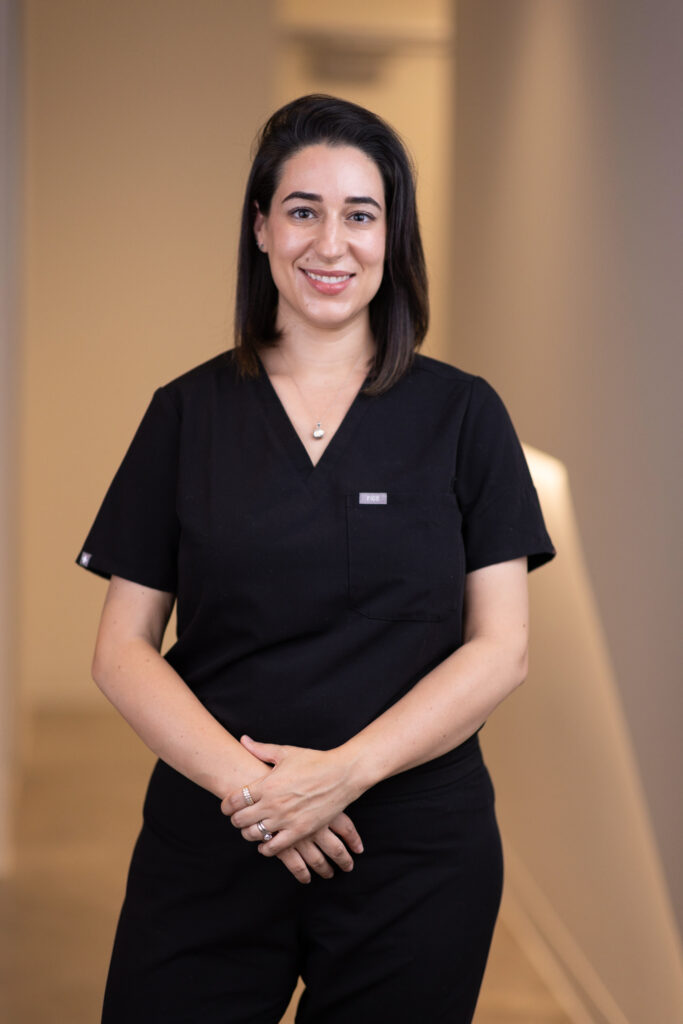
Advantages of Seeking Dr. Karen Toubi's Expertise
- Complete diagnostic workups, from lab testing to pelvic ultrasounds, to pinpoint what is driving the bleeding.
- Individualized irregular periods treatment, with a plan built around your hormones, history, and goals.
- Attention to both immediate relief and the underlying cause, so results hold up over time.
- Clear explanations of your condition, your options, and what to watch for going forward.
Treatment Options for Abnormal Bleeding
Treatment for abnormal uterine bleeding starts with the cause, not the symptom. Depending on what testing shows, Dr. Toubi may recommend hormonal therapy such as birth control pills or a hormonal IUD, medication that calms heavy flow, or a minimally invasive procedure to remove a polyp or fibroid. When cycles are unpredictable rather than heavy, irregular periods treatment follows the same principle: find the driver, then correct it.
Why Choose Dr. Karen Toubi in Beverly Hills?
Bleeding concerns get taken seriously here from the first conversation. Dr. Toubi is board certified in obstetrics and gynecology, holds staff privileges at Cedars-Sinai Medical Center, and pairs modern in-office technology with an unhurried, empathetic approach. If you have been searching for an abnormal bleeding specialist in Beverly Hills, you will find on-site diagnostics, evidence-based treatment, and a physician who listens.
To schedule a consultation, call (424) 479-1770 or send a message through the contact page. The office at 9720 Wilshire Blvd, Ste Lower Level, Beverly Hills, CA 90212 is open Monday through Friday, 9:00 AM to 5:00 PM.

Frequently Asked Questions
Why is my period so heavy?
Common culprits include uterine fibroids, endometrial polyps, and hormone shifts that let the uterine lining build up too thick, which happens often during perimenopause. Certain medications and, less commonly, bleeding disorders play a role too. Because each cause calls for a different fix, an exam and imaging are the fastest route to a real answer.
What is considered a heavy period?
A useful benchmark: soaking through a pad or tampon every hour for several hours in a row, needing to double up on protection, changing during the night, passing clots the size of a quarter or larger, or bleeding beyond seven days. Meeting even one of these regularly is reason enough to get your cycle checked.
Why am I bleeding after my period?
Spotting in the days after a period often traces back to hormone fluctuations, though endometrial polyps, an irritated cervix, and some contraceptives can do the same. One-off light spotting is usually harmless. A pattern that repeats month after month, or bleeding after sex or after menopause, deserves an evaluation rather than a wait-and-see approach.
How do you stop heavy period bleeding?
Short of a medical workup, there is no dependable way to stop it, because heavy flow is a symptom with many possible sources. Iron support can protect your energy while you sort out the cause, but correcting the bleeding itself takes targeted care, from hormone-based options to a brief outpatient procedure. Start with testing so treatment matches the reason.
When should you go to the hospital for heavy menstrual bleeding?
Seek emergency care if you are soaking through a pad or tampon every hour for more than two hours straight, especially alongside dizziness, chest pain, shortness of breath, or a racing heartbeat. Bleeding that heavy can drop blood counts quickly. For anything less acute but still outside your normal, an office visit within days is the right call.
